The House of Prayer turned into a Market.
Mat 21:12 Entering the Temple, Jesus drove out all who were buying and selling there, and overturned the money-changers' tables and the seats of the pigeon-dealers.
Mat 21:13 "It is written," He said, "'MY HOUSE SHALL BE CALLED THE HOUSE OF PRAYER', but you are making it A ROBBERS' CAVE."
Mat 21:14 And the blind and the lame came to Him in the Temple, and He cured them.
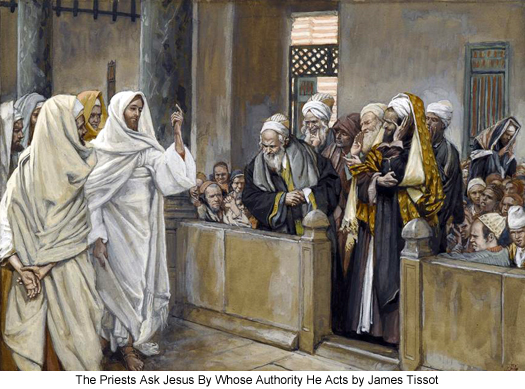
Mat 21:15 But when the High Priests and the Scribes saw the wonderful things that He had done and the children who were crying aloud in the Temple, "GOD SAVE THE SON OF DAVID," they were filled with indignation.
Mat 21:16 "Do you hear," they asked Him, "what these children are saying?" "Yes," He replied; "have you never read, 'OUT OF THE MOUTHS OF INFANTS AND OF BABES AT THE BREAST THOU HAST BROUGHT FORTH THE PRAISE WHICH IS DUE'?"
Mat 21:17 So He left them and went out of the city to Bethany and passed the night there.
Introduction.
What a Contrast to earlier in the same day or the next day as Mark records,when Jesus rode into Jerusalem from the Mount of Olives on a borrowed donkey’s foal. Now He cleanses the temple for the Second Time.
Mat 21:12 Entering the Temple, Jesus drove out all who were buying and selling there, and overturned the money-changers' tables and the seats of the pigeon-dealers.
Notes
Barnes Notes on the NT say,,”And Jesus went into the temple of God ... - From Mar_11:11-15, it is probable that this cleansing of the temple did not take place on the day that he entered Jerusalem in triumph, but on the day following.
He came and looked round upon all things, Mark says, and went out to Bethany with the twelve. On the day following, returning from Bethany, he saw the fig-tree. Entering into the temple, he purified it “on that day;” or perhaps he “finished” the work of purifying it on that day, which he commenced the day before. Matthew has mentioned the purifying of the temple, which was performed, probably, on two successive days, or has stated the “fact,” without being particular as to the order of events. Mark has stated the order more particularly, and has “divided” what Matthew mentions together.
The “temple of God,” that is, the temple dedicated and devoted to the service of God, was built on Mount Moriah. The first temple was built by Solomon, about 1005 years before Christ, 1 Kings 6, He took seven years to build it, according to 1Ki_6:38. David, his father, had contemplated the design of building it, and had prepared many materials for it, but was prevented because he had been a man of war, 1Ch_22:1-9; 1Ki_5:5. This temple, erected with great magnificence, remained until it was destroyed by the Babylonians under Nebuchadnezzar, 584 years before Christ, 2Ch_36:6-7, 2Ch_36:19.
After the Babylonian captivity the temple was rebuilt by Zerubbabel, but with vastly inferior and diminished splendor. The aged people wept when they compared it with the glory of the former temple, Ezr_3:8, Ezr_3:12. This was called the “second” temple. This temple was often defiled in the wars before the time of Christ. It had become much decayed and impaired Herod the Great, being exceedingly unpopular among the Jews on account of his cruelties (see the notes at Matt. 2), was desirous of doing something to obtain the favor of the people, and accordingly, about 16 years before Christ, and in the 18th year of his reign, he commenced the work of repairing it. This he did, not by taking it down entirely at once, but by removing one part after another, until it had become, in fact, a new temple, greatly surpassing the former in magnificence. It was still called by the Jews the “second” temple; and by Christ’s coming to this temple thus repaired, was fulfilled the prophecy in Hag_2:9. On this building Herod employed 18,000 men, and completed it so as to be suitable for use in 9 years, or about 8 years before Christ. But additions continued to be made to it, and it continued increasing in splendor and magnificence until 64 a.d. John says Joh_2:20, “forty and six years was this temple in building.” Christ was then 30 years of age, which, added to the 16 years occupied in repairing it before his birth, makes 46 years.

The word “temple” was given not merely to the sacred edifice or house itself, but to all the numerous chambers, courts, and rooms connected with it on the top of Mount Moriah.
The temple itself was a small edifice, and was surrounded by courts and chambers half a mile in circumference. Into the sacred edifice itself our Saviour never went. The high priest only went into the holy of holies, and that but once a year, and none but priests were permitted to enter the holy place. Our Saviour was neither. He was of the tribe of “Judah,” and he consequently was allowed to enter no further than the other Israelites into the temple. The works that he is said to have performed in the temple, therefore, are to be understood as having been performed in the courts surrounding the sacred edifice. These courts will now be described. The temple was erected on Mount Moriah. The space on the summit of the mount was not, however, large enough for the buildings necessary to be erected. It was therefore enlarged by building high walls from the valley below and filling up the space within. One of these walls was 600 feet in height. The ascent to the temple was by high flights of steps. The entrance to the temple, or to the courts on the top of the mount, was by nine gates, all of them extremely splendid. On every side they were thickly coated with gold and silver. But there was one gate of special magnificence: this was called the Beautiful Gate, Act_3:2. It was on the east side, and was made of Corinthian brass, one of the most precious metals in ancient times. See the Introduction to 1 Corinthians, section 1. This gate was 50 cubits, or 75 feet, in height.
The whole temple, with all its courts, was surrounded by a wall about 25 feet in height. This was built on the wall raised from the base to the top of the mountain, so that from the top of it to the bottom, in a perpendicular descent, was in some places not far from 600 feet. This was particularly the case on the southeast corner; and it was here, probably, that Satan wished our Saviour to cast himself down. See the notes at Mat_4:6.
On the inside of this wall, between the gates, were piazzas or covered porches. On the eastern, northern, and western sides there were two rows of these porches; on the south, three. These porches were covered walks, about 20 feet in width, paved with marble of different colors, with a flat roof of costly cedar, which was supported by pillars of solid marble, so large that three men could scarcely stretch their arms so as to meet around them. These walks or porches afforded a grateful shade and protection to the people in hot or stormy weather. The one on the east side was distinguished for its beauty, and was called Solomon’s porch, Joh_10:23; Act_3:11. It stood over the vast terrace or wall which he had raised from the valley beneath, and which was the only thing of his work that remained in the second temple.
When a person entered any of the gates into this space within the wall he saw the temple rising before him with great magnificence; but the space was not clear all the way up to it. Going forward, he came to another wall, enclosing considerable ground, considered more holy than the rest of the hill. The space between this first and second wall was called “the court of the Gentiles.” It was so called because Gentiles might come into it, but they could proceed no further. On the second wall and on the gates were inscriptions in Hebrew, Greek, and Latin, forbidding any Gentile or unclean person from proceeding further on pain of death. This “court” was not of equal dimensions all the way round the temple. On the east, north, and west it was quite narrow. On the south it was wide, occupying nearly half of the whole surface of the hill. In this court the Gentiles might come. Here was the place where much secular business was transacted. This was the place occupied by the buyers and sellers, and by the money-changers, and which Jesus purified by casting them out.
The enclosure within the second wall was nearly twice as long from east to west as from north to south. This enclosure was also divided. The eastern part of it was called “the court of the women;” so called because women might advance thus far, but no farther. This court was square. It was entered by three gates; one on the north, one on the east directly opposite to the Beautiful gate, and one on the south. In passing from the court of the Gentiles to that of the women, it was necessary to ascend about 9 feet by steps. This court of the women was enclosed with a double wall, with a space between the walls about 15 feet in width, paved with marble. The inner of these two walls was much higher than the one outside. The court of the women was paved with marble. In the corners of that court were different structures for the various uses of the temple. It was in this court that the Jews commonly worshipped. Here, probably, Peter and John, with others, went up to pray, Act_3:1. Here, too, the Pharisee and publican prayed - the Pharisee near the gate that led forward to the temple; the publican standing far off, on the other side of the court, Luk_18:9-14. Paul also was seized here, and charged with defiling the temple by bringing the Gentiles into that holy place, Act_21:26-30.
A high wall on the west side of the court of the women divided it from the court of the Israelites, so called because all the males of the Jews might advance there. To this court there was an ascent of fifteen steps. These steps were in the form of a half circle. The great gate to which these steps led was called the gate “Nicanor.” Besides this, there were three gates on each side, leading from the court of the women to the court of the Israelites.
 |
| James Tissot - Reconstruction of Jerusalem and the Temple of Herod - Brooklyn Museum |
Within the court of the “Israelites” was the court of the “priests,” separated by a wall about 1 1/2 foot in height. Within that court was the altar of burnt-offering and the laver standing in front of it. Here the priests performed the daily service of the temple. In this place, also, were accommodations for the “priests” when not engaged in conducting the service of the temple, and for the Levites who conducted the music of the sanctuary.
The temple, properly so called, stood within this court. It surpassed in splendor all the other buildings of the holy city; perhaps in magnificence it was unequalled in the world. It fronted the east, looking down through the gates Nicanor and the Beautiful Gate, and onward to the Mount of Olives. From the Mount of Olives on the east there was a beautiful and commanding view of the whole sacred edifice. It was there that our Saviour sat when the disciples directed his attention to the goodly stones with which the temple was built, Mar_13:1. The entrance into the temple itself was from the court “of the priests,” by an ascent of twelve steps. The “porch” in front of the temple was 150 feet high and as many broad. The open space in this perch through which the temple was entered was 115 feet high and 37 broad, without doors of any sort, The appearance of this, built, as it was, with white marble, and decorated with plates of silver, from the Mount of Olives was exceedingly dazzling and splendid. Josephus says that in the rising of the sun it reflected so strong and dazzling an effulgence that the eye of the spectator was obliged to turn away. To strangers at a distance, it appeared like a mountain covered with snow, for where it was not decorated with plates of gold it was extremely white and glistening.
The temple itself was divided into two parts. The first, called the “sanctuary” or holy place; was 60 feet in length 60 feet in height, and 30 feet in width. In this was the golden candlestick, the table of showbread, and the altar of incense. The “holy of holies” or the “most holy place,” was 30 feet each way. In the first temple this contained the ark of the covenant, the tables of the law, and over the ark was the mercy-seat and the cherubim. Into this place no person entered but the high priest, and he but once in the year. These two apartments were separated only by a vail, very costly and curiously performed. It was this vail which was rent from the top to the bottom when the Saviour died, Mat_27:51. Around the walls of the “temple,” properly so called, was a structure three stories high, containing chambers for the use of the officers of the temple. The temple was wholly leveled to the ground by the Romans under Titus and Vespasian, and was effectually destroyed, according to the predictions of the Saviour. See the notes at Mat_24:2. The site of it was made like a plowed field. Julian the apostate attempted to rebuild it, but the workmen, according to his own historian, Ammianus Marcellinus, were prevented by balls of fire breaking out from the ground. See Warburton’s “Divine Legation of Moses.” Its site is now occupied by the Mosque of Omar, one of the most splendid specimens of Saracenic architecture in the world.
And cast out all them that sold and bought in the temple - The place where this was done was not the temple itself, but the outer court “or the court of the Gentiles.” This was esteemed the least sacred part of the temple; and the Jews, it seems, did not consider it profanation to appropriate this to any business in any way connected with the temple service. The things which they bought and sold were at first those pertaining. to the sacrifices. It is not improbable, however, that the traffic afterward extended to all kinds of merchandise. It gave rise to much confusion, noise, contention, and fraud, and was exceedingly improper in the temple of the Lord.
The tables of the money-changers - Judea was subject to the Romans. The money in current use was Roman coin; yet the Jewish law required that every man should pay a tribute to the service of the sanctuary of “half a shekel,” Exo_30:11-16. This was a Jewish coin, and the tribute was required to be paid in that coin. It became, therefore, a matter of convenience to have a place where the Roman coin might be exchanged for the Jewish half shekel. This was the “professed” business of these men. Of course, they would demand a small sum for the exchange; and, among so many thousands as came up to the great feasts, it would be a very profitable employment, and one easily giving rise to much fraud and oppression.
The seats of them that sold doves - Doves were required to be offered in sacrifice - Lev_14:22; Luk_2:24 - yet it was difficult to bring them from the distant parts of Judea. It was found much easier to purchase them in Jerusalem. Hence, it became a business to keep them to sell to those who were required to offer them.
Mark adds Mar_11:16 that he “would not suffer that any man should carry any vessel through the temple.” That is, probably, any of the vessels or implements connected with the traffic in oil, incense, wine, etc., that were kept for sale in the temple.
Mat 21:13 "It is written," He said, "'MY HOUSE SHALL BE CALLED THE HOUSE OF PRAYER', but you are making it A ROBBERS' CAVE."
Notes
My house shall be called the house of prayer - This is taken from Isa_56:7.
But ye have made it a den of thieves - This is taken from Jer_7:11.
Our Lord alludes here to those dens and caves in Judea, in which the public robbers either hid or kept themselves fortified.
They who are placed in the Church of Christ to serve souls, and do it not, and they who enjoy the revenues of the Church, and neglect the service of it, are thieves and robbers in more senses than one. A.C.
Jesus Christ
(1) did not connive at abuses for the sake of securing popular favour;
(2) did not allow abuses to be continued on the ground that the circumstances were temporary; He knew the temple would soon be destroyed;
(3) showed that man’s convenience was to be subordinated to God’s right;
(4) showed in this, as in all other cases, that the right one, is morally stronger than the wicked many. (J. Parker, D. D.)
Mat 21:14 And the blind and the lame came to Him in the Temple, and He cured them.
Notes.
Now the Compassionate Jesus brings grace and healing to those in need.This is our Saviour. Not just driving out the wicked but taking pity on the needy and afflicted.
Mat 21:15 But when the High Priests and the Scribes saw the wonderful things that He had done and the children who were crying aloud in the Temple, "GOD SAVE THE SON OF DAVID," they were filled with indignation.
Notes
The chief priests - were sore displeased - Or, were incensed. Incensed at what! At the purification of the profaned temple! This was a work they should have done themselves, but for which they had neither grace nor influence; and their pride and jealousy will not suffer them to permit others to do it. Strange as it may appear, the priesthood itself, in all corrupt times, has been ever the most forward to prevent a reform in the Church. Was it because they were conscious that a reformer would find them no better than money-changers in, and profaners of, the house of God, and that they and their system must be overturned, if the true worship of God were restored! Let him who is concerned answer this to his conscience.A.C.
Mat 21:16 "Do you hear," they asked Him, "what these children are saying?" "Yes," He replied; "have you never read, 'OUT OF THE MOUTHS OF INFANTS AND OF BABES AT THE BREAST THOU HAST BROUGHT FORTH THE PRAISE WHICH IS DUE'?"
Notes.
It is upon the child that this sarcastic question still falls. Some hardly think the children can be converted. The Saviour’s answer is splendid when He said, “Have you never read?” Never caught the inner sense, never read so as to understand, etc.
I. Children are capable of very deep piety,
1. They are capable of that early grace with which true religion usually begins-a deep repentance.
2. No one who has seen converted children will ever doubt their capacity for faith, in some respects greater than that of the adult. Their faith is more easy, vivid, effective.
3. When they come to love our Lord, they do love.
4. I have noticed in children other virtues-courage, patience, great understanding of the fear of God. B.Illustrator
 |
| Children Worshipping in Samoa |
Mat 21:17 So He left them and went out of the city to Bethany and passed the night there.
Notes
Here were his friends, Mary, Martha and Lazareth. He passed the night there in Bethany.