Monday, 5 October 2015

Matthew 25 : 31 - 46 Separation of the Sheep Nations from the Goat Nations.

Their Relationship to the least of Jesus’ Brothers the Jews. What will happen to them on Judgment Day.
Mat 25:31  "When the Son of Man comes in His glory, and all the angels with Him, then will He sit upon His glorious throne,
Mat 25:32  and all the nations will be gathered into His presence. And He will separate them from one another, just as a shepherd separates the sheep from the goats;
Mat 25:33  and will make the sheep stand at His right hand, and the goats at His left.
Mat 25:34  "Then the King will say to those at His right, "'Come, my Father's blessed ones, receive your inheritance of the Kingdom which has been divinely intended for you ever since the creation of the world.
Mat 25:35  For when I was hungry, you gave me food; when I was thirsty, you gave me drink; when I was homeless, you gave me a welcome;
Mat 25:36  when I was ill-clad, you clothed me; when I was sick, you visited me; when I was in prison, you came to see me.'
Mat 25:37  "'When, Lord,' the righteous will reply, 'did we see Thee hungry, and feed Thee; or thirsty, and give Thee drink?
Mat 25:38  When did we see Thee homeless, and give Thee a welcome? or ill-clad, and clothe Thee?
Mat 25:39  When did we see Thee sick or in prison, and come to see Thee?'
Mat 25:40  "But the King will answer them, "'In solemn truth I tell you that in so far as you rendered such services to one of the humblest of these my brethren, you rendered them to myself.'
Mat 25:41  "Then will He say to those at His left, "'Begone from me, with the curse resting upon you, into the Fire of the Ages, which has been prepared for the Devil and his angels.
Mat 25:42  For when I was hungry, you gave me nothing to eat; when thirsty, you gave me nothing to drink;
Mat 25:43  when homeless, you gave me no welcome; ill-clad, you clothed me not; sick or in prison, you visited me not.'
Mat 25:44  "Then will they also answer, "'Lord, when did we see Thee hungry or thirsty or homeless or ill-clad or sick or in prison, and not come to serve Thee?'
Mat 25:45  "But he will reply, "'In solemn truth I tell you that in so far as you withheld such services from one of the humblest of these, you withheld them from me.'
Mat 25:46  "And these shall go away into the Punishment of the Ages, but the righteous into the Life of the Ages."

Introduction.

This is the conclusion to the Olivet Discourse. Every nation under heaven will be called to give account for his and her opportunities to bless Israel. Jesus has been emphasizing READINESS for His Coming Back. On Judgment Day there are going to be some surprises. This is not about Grace and faith. It is about works, the kind deeds they have done to the Least of these my brethren.
What Evidence will be used to judge you on the Day?
Jesus will be the Judge on the Last Day. He is God and not just Messiah. This Last Judgment Judge will be the Messiah Himself clothed in Glory.

Mat 25:31  "When the Son of Man comes in His glory, and all the angels with Him, then will He sit upon His glorious throne,
Notes
The previous section was the parable of the talents where the profitable servants were rewarded and the wicked lazy one was cast out to where there is weeping and gnashing of teeth.
Now, "When the Son of Man comes in His glory, and all the angels with Him,
Notes
Jesus whole earthly life was one of lowliness and service. Now in His Second Coming to earth, when the Son of Man comes in His Glory. His will be the Majestic Authority and Splendour of Heaven. So His Second Coming will be Strikingly Different.
then will He sit upon His glorious throne,
This is His Throne of heavenly Glory - The Royal Throne of the Messiah.
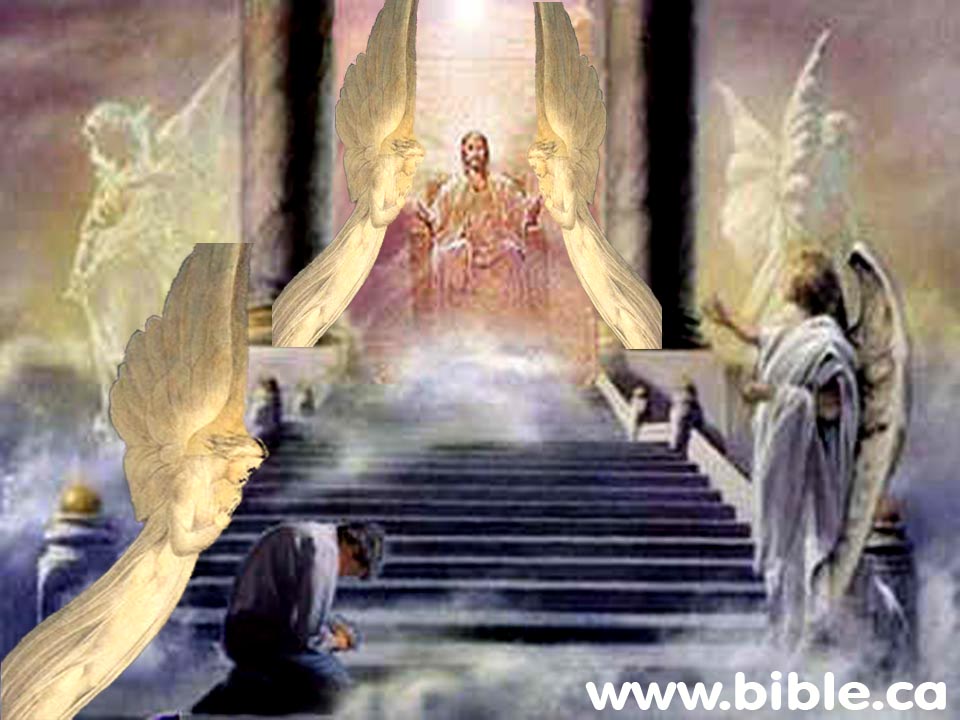
Mat 25:32  and all the nations will be gathered into His presence. And He will separate them from one another, just as a shepherd separates the sheep from the goats;
Mat 25:33  and will make the sheep stand at His right hand, and the goats at His left.


https://nancyaruegg.files.wordpress.com/2015/03/441495a7b7e000ac4e649a52998c0a9f.jpg?w=468&h=351

Notes
The Sheep and Goat Nations will be herded before Him. What we do now will have consequences in the Future. Note that the Sheep and the Goats have a very different nature. Sheep are quieter. The follow a leader. They are vulnerable to predators. They need close care.
Goats are more wilely and shrewd. They escape danger and are unafraid even arrogant of nature.
The separation of the Sheep from the goats will depend upon their attitude
as to how you rendered such services to one of the humblest of these my brethren.I see this as indicative of the Jewish nation. They are small; the tiniest of nations but so important in the Middle East. They live  at the centre of the continents of Asia Europe and Africa. What is your attitude to the Jews. ARE YOU ANTI-SEMITIC?
America was always a great support of Israel when they lived by the Word of God. But Now under The Obama Administration they are no longer trusted by the Jews. 
Israel is the dividing  point of the Line in the sand between the sheep and Goat Nations.

Mat 25:34  "Then the King will say to those at His right, "'Come, my Father's blessed ones, receive your inheritance of the Kingdom which has been divinely intended for you ever since the creation of the world.
Notes
The King - That is, the Lord Jesus, the King of Zion and of the universe, now acting as Judge, Luk_19:38; Joh_18:37; Rev_17:14; Rev_19:16.

Blessed of my Father - Made happy or raised to felicity by my Father. See the notes at Mat_5:3.

Inherit the kingdom - Receive “as heirs” the kingdom, or be received there as the sons of God. Christians are often called heirs of God, Rom_8:17; Gal_4:6-7; Heb_1:14; 1Jo_3:2.

Prepared for you ... - That is, “designed” for you, or appointed for you. The phrase “from the foundation of the world” is used to denote that this was appointed for them in the beginning; that God has no new plan; that the rewards which he will now confer on them he always intended to confer. Christ says to the righteous that the kingdom was prepared for “them.” Of course, God meant to confer it on “them.” Barnes

Mat 25:35  For when I was hungry, you gave me food; when I was thirsty, you gave me drink; when I was homeless, you gave me a welcome;
Notes.
Hospitality… Is always encouraged in the Word of God. In Jesus day there were some Inns but they were few and far between. It was difficult to get accommodation in a strange city especially if your were a foreigner.
Act 10:32  Send therefore to Jaffa, and invite Simon, surnamed Peter, to come here. He is staying as a guest in the house of Simon, a tanner, close to the sea.'
Heb 13:2  Do not neglect to show kindness to strangers; for, in this way, some, without knowing it, have had angels as their guests.
when I was homeless, you gave me a welcome;
Illustration
In Holland during the WW2 The Ten Boom family took in Jews who were hiding from the Gestapo. They built a false wall in an upstairs bedroom with a door through the bottom of the shoes space. Six people could always hide in there. They were secreted away onto farms etc. Someone who was in the underground squealed when they were tortured by the Nazis and the ten Booms were arrested. Papa and Betsy died in Prison. Corrie lived through the ordeal and told their story around the world. It is well worth the train trip from Amsterdam to Haarlem just to see their home and the false room. A thirteen year old Jewish boy who escaped from the Hiding Place returned to Haarlem from South Africa for the 50th anniversary of their escape.


The Hiding Place full movie Corrie Ten Boom - YouTube

www.youtube.com/watch?v=XX0GwjXExFE

Mat 25:36  when I was ill-clad, you clothed me; when I was sick, you visited me; when I was in prison, you came to see me.'


Notes
When I was naked you clothed me. In terrible rags this is a true sign of poverty.

when I was sick, you visited me.
A compassionate Visit can do more to lift the spirit of a sick person than anything.

When I was in prison you came to me.
I remember the Great Billy Graham visited lesser known celebs while they were incarcerated for their crimes. The first century prisons were grim affairs. Some of the Prisons in the developing world are worse than desireable.

© Julie Remy: The "Chambre noire" or "dark room", where a dozen prisoners are tied to a bar and held with another dozen in a barely lit cell. MSF launched a short nutritional and medical response in that prison in September 2008


Mat 25:37  "'When, Lord,' the righteous will reply, 'did we see Thee hungry, and feed Thee; or thirsty, and give Thee drink?
Mat 25:38  When did we see Thee homeless, and give Thee a welcome? or ill-clad, and clothe Thee?
Mat 25:39  When did we see Thee sick or in prison, and come to see Thee?'


Mat 25:40  "But the King will answer them, "'In solemn truth I tell you that in so far as you rendered such services to one of the humblest of these my brethren, you rendered them to myself.'
Notes
Unto one of these least (or, these the least’) of my brethren, ye did it unto me. This principle is the basis of Christian charity, as of all Christian morality. The prominence given to it shows that real faith in Christ must manifest itself in such Christian charity. The early Christians acted at once on this principle. Christ lives again and perpetually in the persons of His people; as we treat them, we treat Him. All men are to be treated thus, because possible brethren of Christ. Some suppose that the saints appear with Christ as judges; hence the expression, ‘these my brethren.’ But no theory need exclude the pleasing thought that some may have unconsciously been ‘blessed by the Father,’ with love in their hearts, feeling its way to Him who is Love, through acts of charity to men, even while Christ has not been made known to them.
Popular New Testament


Mat 25:41  "Then will He say to those at His left, "'Begone from me, with the curse resting upon you, into the Fire of the Ages, which has been prepared for the Devil and his angels.
Notes
On the left hand - The wicked.
Ye cursed - That is, you who are devoted to destruction, whose characters deserve everlasting punishment, and who are about to enter into it. “To curse” is the opposite of “to bless.” It implies a negation of all the blessings of heaven, and a positive infliction of eternal sufferings.
Everlasting fire - “Fire,” here, is used to denote punishment. The image is employed to express extreme suffering, as a death by burning is one of the most horrible that can be conceived. The image was taken, probably, from the fires burning in the Valley of Hinnom. See the notes at Mat_5:22. It has been asked whether the wicked will be burned in literal fire, and the common impression has been that they will be. Respecting that, however, it is to be observed:
  1. that the main truth intended to be taught refers not to the manner of suffering, but to the certainty and intensity of it.
  2. that the design, therefore, was to present an image of terrific and appalling suffering - an image well represented by fire
  3. that this image was well known to the Jews Isa_66:24, and therefore expressed the idea in a very strong manner. Barnes

Mat 25:42  For when I was hungry, you gave me nothing to eat; when thirsty, you gave me nothing to drink;
Mat 25:43  when homeless, you gave me no welcome; ill-clad, you clothed me not; sick or in prison, you visited me not.'
Mat 25:44  "Then will they also answer, "'Lord, when did we see Thee hungry or thirsty or homeless or ill-clad or sick or in prison, and not come to serve Thee?'
Mat 25:45  "But he will reply, "'In solemn truth I tell you that in so far as you withheld such services from one of the humblest of these, you withheld them from me.'
Notes
By not doing good to the poor and needy, to the stranger and the prisoner, they showed that they had not his spirit, and were not like him, and were unfit for his kingdom. Let it be observed here that the public ground of their condemnation is the neglect of duty, or because “they did it not.” We are not to suppose that they will not also be condemned for their open and positive sins. See Rom_2:9; Eph_5:5; Col_3:5-6; 1Co_6:9-10; Rev_21:8; Psa_9:17. But their neglect of doing good to him and his people may be the “public” reason of condemning them:
  1. Because he wished to give pre-eminence to those virtues, to excite his followers to do them.
  2. People should be punished for neglect as well as for positive sin. Sin is a violation of the law, or refusing to do what God commands.
  3. Nothing better shows the true state of the heart than the proper performance of those duties, and the true character can be as well tested by neglecting them as by open crimes.

Mat 25:46  "And these shall go away into the Punishment of the Ages, but the righteous into the Life of the Ages."
Notes

Refusal to respond to urgent needs is a sign that, that nation is not a sheep country. I remember when that huge tsunami hit Sumatra in 2004 Many of the oil rich nations did nothing absolutely nothing.

Saturday, 3 October 2015

Matthew 25: 14 - 30 The Parable of the Talents.

Servants trading with their Master’s Money
Mat 25:14  "Why, it is like a man who, when going on his travels, called his bondservants and entrusted his property to their care.
Mat 25:15  To one he gave five talents, to another two, to another one--to each according to his individual capacity; and then started from home.
Mat 25:16  Without delay the one who had received the five talents went and employed them in business, and gained five more.
Mat 25:17  In the same way he who had the two gained two more.
Mat 25:18  But the man who had received the one went and dug a hole and buried his master's money.
Mat 25:19  "After a long lapse of time the master of those servants returned, and had a reckoning with them.
Mat 25:20  The one who had received the five talents came and brought five more, and said, "'Sir, it was five talents that you entrusted to me: see, I have gained five more.'
Mat 25:21  "'You have done well, good and trustworthy servant,' replied his master; 'you have been trustworthy in the management of a little, I will put you in charge of much: share your master's joy.'
Mat 25:22  "The second, who had received the two talents, came and said, "'Sir, it was two talents you entrusted to me: see, I have gained two more.'
Mat 25:23  "'Good and trustworthy servant, you have done well,' his master replied; 'you have been trustworthy in the management of a little, I will put you in charge of much: share your master's joy.'
Mat 25:24  "But, next, the man who had the one talent in his keeping came and said, "'Sir, I knew you to be a severe man, reaping where you had not sown and garnering what you had not winnowed.
Mat 25:25  So being afraid I went and buried your talent in the ground: there you have what belongs to you.'
Mat 25:26  "'You wicked and slothful servant,' replied his master, 'did you know that I reap where I have not sown, and garner what I have not winnowed?
Mat 25:27  Your duty then was to deposit my money in some bank, and so when I came I should have got back my property with interest.
Mat 25:28  So take away the talent from him, and give it to the man who has the ten.'
Mat 25:29  (For to everyone who has, more shall be given, and he shall have abundance; but from him who has nothing, even what he has shall be taken away.)
Mat 25:30  'But as for this worthless servant, put him out into the darkness outside: *there* will be the weeping and the gnashing of teeth.'

Introduction

We are expected to live out our Faith in the real world. This Parable starts with the fact that we are all given different gifts and capacities and brings out the way we use (or don’t use )what God has given to us.

Comments

Mat 25:14  "Why, it is like a man who, when going on his travels, called his bondservants and entrusted his property to their care.
Notes
"Why, it is like a man who….. What does the ‘it’ in this phrase refer to. This Parable follows directly after the Parable of the Ten Girls where it says the Kingdom of heaven is like… .We are left in no doubt that Jesus is referring to the kingdom of heaven. see v.1.  That Parable taught the Importance of being ready. This one expands on that there and shows what being ready actually means.
The Kingdom of Heaven is like a man who, when going on his travels,[ a man going abroad]. This Master was very wealthy and desired that his money worked for him in his absence. L. M. p.627


Mat 25:15  To one he gave five talents, to another two, to another one--to each according to his individual capacity; and then started from home.
Notes
A talent: This was a measure of weight. It did not indicate abilities in Bible days. It could be gold or silver or copper but we do not know the exact weight of the talent in New Testament times.
All we can say is that 5 talents represented a considerable sum of money. Two was a less amount and even the one talent was not to be disregarded. L.M. p.627
The Master must have calculated the amounts according to the evident abilities of the Servants. He only wanted them to trade as best they could.


Mat 25:16  Without delay the one who had received the five talents went and employed them in business, and gained five more.
Notes
The first servant Immediately set to work. Without delay. There was no procrastination with this servant. He knew what His Master wanted. The Important thing was that he traded with the money he had..
Mat 25:17  In the same way he who had the two gained two more.
He was also a diligent worker and set to work immediately with his two talents.
Mat 25:18  But the man who had received the one went and dug a hole and buried his master's money.
Notes
This third type of man went  and dug a whole. Now I think he may have been scared that he would lose his one talent or it may have been stolen. So much money had never been seen in his hands and he didn't trust anyone even himself. He hid his master’s money. Now his money was secure.

Mat 25:19  "After a long lapse of time the master of those servants returned, and had a reckoning with them.
Notes
The Master returned after a long time. The first two servants increased their money by 100%.The day of reckoning had come.
Mat 25:20  The one who had received the five talents came and brought five more, and said, "'Sir, it was five talents that you entrusted to me: see, I have gained five more.'
Notes
Here he explains the results of his trading. “I have gained five more.”


Mat 25:21  "'You have done well, good and trustworthy servant,' replied his master; 'you have been trustworthy in the management of a little, I will put you in charge of much: share your master's joy.'
Notes
"'You have done well, good and trustworthy servant,' replied his master…
“Well done!” This was a mark of approval from the Master.
good and trustworthy servant, excellent and faithful servant.
'you have been trustworthy in the management of a little, I will put you in charge of much: share your master's joy.'
Faithful over a few things The considerable sum of Five Talents was said to be just a little to a very wealthy landowner. Then the Master told he would put him in charge of Much more.
share your master's joy.' Enter in to your master's joy. His future was assured and he would experience much joy.


Mat 25:22  "The second, who had received the two talents, came and said, "'Sir, it was two talents you entrusted to me: see, I have gained two more.'
Mat 25:23  "'Good and trustworthy servant, you have done well,' his master replied; 'you have been trustworthy in the management of a little, I will put you in charge of much: share your master's joy.'
Notes
Here is the second servant received the Master’s recommendation. It was almost identical to the wording of the first servant’s recommendation.
Mat 25:24  "But, next, the man who had the one talent in his keeping came and said, "'Sir, I knew you to be a severe man, reaping where you had not sown and garnering what you had not winnowed.
Notes
"But, next, the man who had the one talent in his keeping came and said..
But is an adversative conjunction. Instead of appreciation this servant was about ot get a rebuke.
"'Sir, I knew you to be a severe man, reaping where you had not sown and garnering what you had not winnowed. A severe or hard man.  Tough rough and harsh. He put this forth as his excuse for doing nothing. He knew that the Master expected a profit. reaping where you had not sown and garnering what you had not winnowed… His master expected a crop. He knew how to profit in all sorts of places


Mat 25:25  So being afraid I went and buried your talent in the ground: there you have what belongs to you.'
Notes
And I was afraid — of making matters worse by meddling with it at all.
and went and hid thy talent in the earth — This depicts the conduct of all those who shut up their gifts from the active service of Christ, without actually prostituting them to unworthy uses. Fitly, therefore, may it, at least, comprehend those, to whom Trench refers, who, in the early Church, pleaded that they had enough to do with their own souls, and were afraid of losing them in trying to save others; and so, instead of being the salt of the earth, thought rather of keeping their own saltness by withdrawing sometimes into caves and wildernesses, from all those active ministries of love by which they might have served their brethren.

Mat 25:26  "'You wicked and slothful servant,' replied his master, 'did you know that I reap where I have not sown, and garner what I have not winnowed?
Notes
"'You wicked and slothful servant,' replied his master
Far from accepting his explanation the master brings a rebuke. You are wicked and lazy.
His normal attitude towards work resulted in his dislike for gaining any profit for his master.
Mat 25:27  Your duty then was to deposit my money in some bank, and so when I came I should have got back my property with interest.
Notes
How easily this man could have made some profit. By Putting the money in some bank.


Mat 25:28  So take away the talent from him, and give it to the man who has the ten.'
Notes
Take the money away from the lazy servant and give it to him who has ten. He knows how to trade.
Mat 25:29  (For to every one who has, more shall be given, and he shall have abundance; but from him who has nothing, even what he has shall be taken away.)
Notes
Here Jesus is laying down a principle of spiritual life, which is of great importance.
If you fail to use the talents which God has given you you will forfeit them.  If you use what you have been given then it will grow and develop.


Mat 25:30  'But as for this worthless servant, put him out into the darkness outside: *there* will be the weeping and the gnashing of teeth.'
Notes
This servant is unprofitable. He is a taker and not a giver. He has had the control of a full talent and buried it.
put him out into the darkness outside: *there* will be the weeping and the gnashing of teeth.'
This speaks of punishment and deep grief. It is the results from neglecting to use the one talent that he was given.

Friday, 2 October 2015

Matthew 25 : 1 - 13 The Parable of the Ten Girls or Young Women.

Jesus continues to teach His Followers of the NECESSITY of CONTINUAL READINESS.

Mat 25:1  "Then will the Kingdom of the Heavens be found to be like ten bridesmaids who took their torches and went out to meet the bridegroom.
Mat 25:2  Five of them were foolish and five were wise.
Mat 25:3  For the foolish, when they took their torches, did not provide themselves with oil;
Mat 25:4  but the wise, besides their torches, took oil in their flasks.
Mat 25:5  The bridegroom was a long time in coming, so that meanwhile they all became drowsy and fell asleep.
Mat 25:6  But at midnight there is a loud cry, "'The bridegroom! Go out and meet him!'
Mat 25:7  "Then all those bridesmaids roused themselves and trimmed their torches.
Mat 25:8  "'Give us some of your oil,' said the foolish ones to the wise, 'for our torches are going out.'
Mat 25:9  "'But perhaps,' replied the wise, 'there will not be enough for all of us. Go to the shops rather, and buy some for yourselves.'
Mat 25:10  "So they went to buy. But meanwhile the bridegroom came; those bridesmaids who were ready went in with him to the wedding banquet; and the door was shut.
Mat 25:11  "Afterwards the other bridesmaids came and cried, "'Sir, Sir, open the door to us.'
Mat 25:12  "'In solemn truth I tell you,' he replied, 'I do not know you.'
Mat 25:13  "Keep awake therefore; for you know neither the day nor the hour. WNT

Introduction.

Jesus has been Emphasizing Watchfulness because He saw this as so Important. Some parts of this story are allegorical but this is really a Parable. An earthly story with a heavenly meaning. The Marriage customs in Jesus' Day were very different from today even though we are at a loss to understand some of the details.


Mat 25:1  "Then will the Kingdom of the Heavens be found to be like ten bridesmaids who took their torches and went out to meet the bridegroom.
Notes
the Kingdom of the Heavens be found to be like ten bridesmaids…
Mr. Weymouth sees the virgins, as bridesmaids. It is an illustration of what Christ has been talking about in Chapter 24 Being alert and ready for Christ's Return.

Jesus says the Kingdom of heaven will be like ten girls, (virgins) as married women were not attendants at a wedding at that time. When the Bridegroom came they would have formed part of the procession.
Middle Eastern Wedding procession

who took their torches and went out to meet the bridegroom.

They took lamps (torches), and went out to meet the Bridegroom
The “lamps” used on such occasions were rather “torches” or “flambeaux.” They were made by winding rags around pieces of iron or earthenware, sometimes hollowed so as to contain oil, and fastened to handles of wood. These torches were dipped in oil, and gave a large light. Marriage “ceremonies” in the East were conducted with great pomp and solemnity. The ceremony of marriage was performed commonly in the open air, on the banks of a stream. Both the bridegroom and bride were attended by friends. Barnes Notes


The whole imagery of the parable is drawn from Eastern marriage customs. The betrothal, which took place some time before the marriage, was a kind of solemn marriage contract, but preliminary to its final consummation. When the time for the celebration of the marriage came, the bridegroom came to the house of the bride and brought her by night to his own house. The virgin bridesmaids awaited his coming and attended the bride to the marriage feast. The People’s New Testament


Mat 25:2  Five of them were foolish and five were wise.
Notes
foolish and  wise; The quality that made the difference between them was prudent forethought on the part of the wise. Compare Mat_7:21-27.


Mat 25:3  For the foolish, when they took their torches, did not provide themselves with oil;
Notes
They that were foolish took their lamps and took no oil with them. The Jewish lamp was a shallow vessel filled with oil, on which the wick floated. These virgins had oil in their lamps when they started, but had no oil to replenish them. They started out, apparently, all right, but did not hold out. PNT
Mat 25:4  but the wise, besides their torches, took oil in their flasks.
Notes
The words “wise and foolish,” here, refer only to their conduct; in regard to the oil. The one part was “wise” in taking oil, the other “foolish” in neglecting it. The conduct of those who were “wise” refers to those who are “prepared” for the coming of Christ - prepared by possessing real piety, and not being merely his professed followers. The conduct of those “without” oil expresses the conduct of those who profess to love him, but are destitute of true grace, and are therefore unprepared to meet him. Barnes


Mat 25:5  The bridegroom was a long time in coming, so that meanwhile they all became drowsy and fell asleep.
Notes
The bridegroom tarried - That is, while they waited for him. It was uncertain at what time he would come. He delayed longer than they expected.
All slumbered and slept - Waiting until near midnight, they fell asleep. This circumstance is not to be pressed to prove that all Christians will be asleep, or cold and careless, when the Lord Jesus shall come. “Many” may be so, but many, also, will be looking for his coming. This circumstance is designed simply to show more clearly the “duty of being ready,” Mat_25:13. It does not mean to affirm it “as a fact” that none will be ready.
lept, Mat_25:5. Observe here,
[1.] The bridegroom tarried, that is, he did not come out so soon as they expected. What we look for as certain, we are apt to think is very near; many in the apostles' times imagined that the day of the Lord was at hand, but it is not so. Christ, as to us, seems to tarry, and yet really does not, Hab_2:3. There is good reason for the Bridegroom's tarrying; there are many intermediate counsels and purposes to be accomplished, the elect must all be called in, God's patience must be manifested, and the saints' patience tried, the harvest of the earth must be ripened, and so must the harvest of heaven too. But though Christ tarry past our time, he will not tarry past the due time.M.H.


Mat 25:6  But at midnight there is a loud cry, "'The bridegroom! Go out and meet him!'
Notes
And at midnight — that is, the time when the Bridegroom will be least expected; for “the day of the Lord so cometh as a thief in the night” (1Th_5:2).
there was a cry made, Behold, the Bridegroom cometh; go ye out to meet him — that is, Be ready to welcome Him.


Mat 25:7  "Then all those bridesmaids roused themselves and trimmed their torches.
Notes
the foolish virgins as well as the wise. How very long do both parties seem the same - almost to the moment of decision! Looking at the mere form of the parable, it is evident that the folly of “the foolish” consisted not in having no oil at all; for they must have had oil enough in their lamps to keep them burning up to this moment: their folly consisted in not making provision against its exhaustion, by taking with their lamp an oil-vessel wherewith to replenish their lamp from time to time, and so have it burning until the Bridegroom should come. Are we, then - with some even superior expositors - to conclude that the foolish virgins must represent true Christians as well as do the wise, since only true Christians have the Spirit, and that the difference between the two classes consists only in the one having the necessary watchfulness which the other wants? Certainly not. Since the parable was designed to hold forth the prepared and the unprepared to meet Christ at His coming, and how the unprepared might, up to the very last, be confounded with the prepared - the structure of the parable behooved to accommodate itself to this, by making the lamps of the foolish to burn, as well as those of the wise, up to a certain point of time, and only then to discover their inability to burn on for want of a fresh supply of oil. But this is evidently just a structural device; and the real difference between the two classes who profess to love the Lord’s appearing is a radical one - the possession by the one class of an enduring principle of spiritual life, and the want of it by the other. JFB


Mat 25:8  "'Give us some of your oil,' said the foolish ones to the wise, 'for our torches are going out.'
Mat 25:9  "'But perhaps,' replied the wise, 'there will not be enough for all of us. Go to the shops rather, and buy some for yourselves.'
Notes
Are you really prepared to meet your Lord. He who endures to the end will be saved.


Mat 25:10  "So they went to buy. But meanwhile the bridegroom came; those bridesmaids who were ready went in with him to the wedding banquet; and the door was shut.
Notes
Their neglect was fatal. They delayed too long. They were still searching when the Bridegroom came.
those bridesmaids who were ready went in with him to the wedding banquet; and the door was shut.
Their forethought was justified for they had the oil which they needed there at hand. They could now easily take their place in the celebration.


Mat 25:11  "Afterwards the other bridesmaids came and cried, "'Sir, Sir, open the door to us.'
Notes
Don't be late for the Banquet!!!!!!!!!!
Mat 25:12  "'In solemn truth I tell you,' he replied, 'I do not know you.'
Mat 25:13  "Keep awake therefore; for you know neither the day nor the hour.